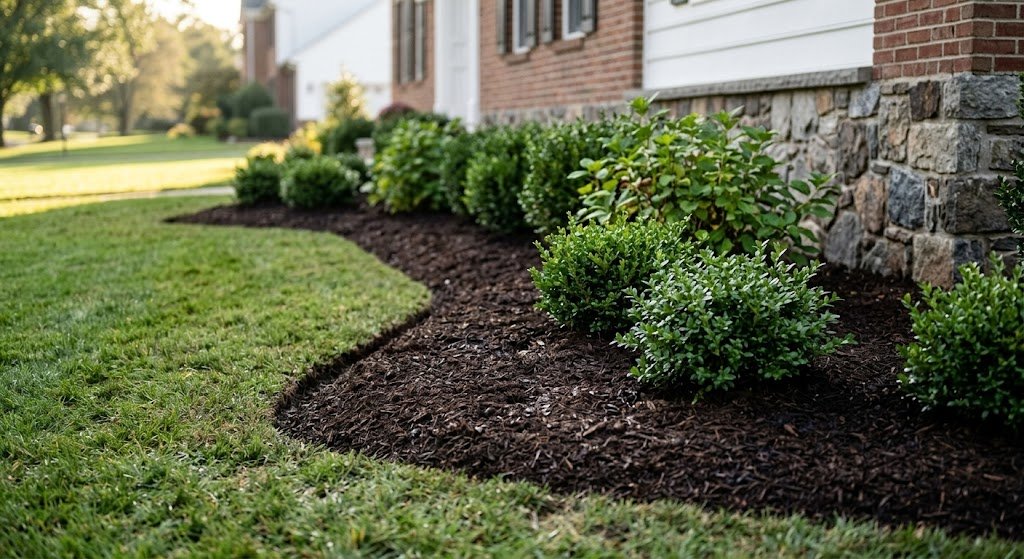
Mulch color is one of those decisions homeowners make in 30 seconds at a garden center and then live with for a year. It deserves more thought. The wrong color makes the whole house look off — the right one makes everything pop.
The three real options
Despite what big-box stores would have you believe, there are essentially three mulch color choices that matter: dark brown, black, and red. Natural/golden mulch fades to gray within months and looks washed out the rest of the year, so we'll skip it.
Dark brown — the safe winner
If you can't decide, choose dark brown. It works with every house color, every architectural style, every plant variety. It looks natural (because it is — it's just shredded hardwood with no dye, or with subtle dye to deepen the color). It complements green plants without competing with them. It ages gracefully — fading slightly but never looking weird.
Best for: Traditional homes (colonials, ranches, capes), red-brick exteriors, white houses, gray houses, anywhere with mature plantings. The neutral default that always works.
Avoid if: Honestly, almost never. Dark brown is the safest choice in the catalog.
Black — modern and dramatic
Black mulch creates strong visual contrast — bright green plants pop against it, light-colored hardscape looks crisper, and the overall effect reads modern, intentional, and high-end. It's the right choice for contemporary homes and properties where the goal is "magazine spread" curb appeal.
Best for: Modern and contemporary homes, gray or charcoal-painted exteriors, properties with lots of light hardscape (pavers, white walkways), homes with bright flower plantings.
Avoid if: Your home is already dark (dark siding, brown brick) — black mulch against a dark exterior looks heavy and depressing. Also avoid in tight or shady beds where it can look almost like absence of color.
Watch out for: Cheap black mulch is often dyed pine, which fades fast and can streak white siding if it splashes during rain. Spend the extra dollar for properly-dyed hardwood.
Red — handle with care
Red mulch is the most controversial of the three. Done right, it adds warmth and works beautifully with certain home styles. Done wrong, it fights with everything around it and dates the property.
Best for: Red-brick homes (matches the brick tone), warm-toned siding (tan, beige, sand), homes with warm-toned roof shingles. Also works for properties where the goal is high color and lots of warmth — Mediterranean styles, southwest aesthetics.
Avoid if: Your home has cool tones (gray, blue, white) — red mulch will look cheap and clashing. Avoid against red brick that's a slightly different shade of red — you'll create a discordant mismatch instead of a harmonious match. Avoid for traditional New England-style homes where it looks anachronistic.
The red mulch failure mode: Most "bad mulch" you see in NJ is red mulch in the wrong context. Be honest about whether your house actually wants red, or whether you're just used to seeing it because it's everywhere.
The biggest mistake (regardless of color)
Putting too much down. 2-3 inches is the right depth. 4+ inches suffocates plant roots, holds too much moisture against trunks (rotting them), and creates the perfect environment for fungal disease. The "more is better" instinct is wrong. A 2-inch fresh layer over the existing mulch is the right annual refresh — not a 4-inch reburial.
The other mistake
Mulch volcanoes around tree trunks. You've seen them — the cone of mulch piled 12 inches high against the bark of a tree. This kills trees over time. Bark wasn't designed to be buried in moisture-holding material. Mulch should taper down to flat ground at the trunk, not pile up against it. If your landscaper has been making volcanoes, they're hurting your trees.
How much you actually need
One cubic yard of mulch covers about 100 sqft at a proper 3-inch depth. Most Central NJ residential properties need somewhere between 4-15 yards depending on bed size. We can measure your beds and give you an accurate estimate — no guessing, no over-ordering.
Refresh schedule
Most homes benefit from a fresh top-off layer every spring. You don't need to remove the old mulch first — adding 1-2 inches of fresh material on top each spring keeps everything looking new and the depth right at the magic 3-inch zone. Every 4-5 years it's worth raking out and replacing entirely as the bottom layers are mostly composted.
If you want it done right
Mulch installation is one of the highest-value services we offer per dollar — instant curb appeal, real plant-health benefits, and crisp finished beds. Our mulching service page has full pricing and what's included. Free measurements and quotes for any Central NJ property. We can match your existing color or help you pick the right one if you're starting fresh.