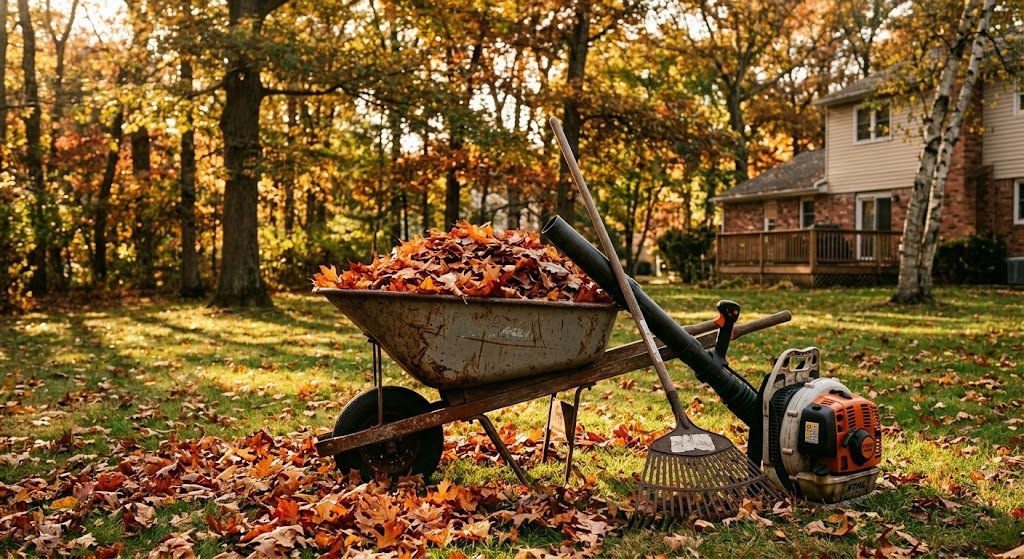
Fall cleanup isn't just about making the yard look nice before Thanksgiving — it's the single most important round of maintenance for protecting your lawn, beds, and home through a Central NJ winter. Skip it and you'll pay for it in spring. Here's the full checklist.
Why fall cleanup matters in NJ
Central New Jersey gets a specific combination of weather that makes fall cleanup critical: heavy leaf drop from mature deciduous trees, freeze-thaw cycles that damage anything improperly prepped, and snow cover that can trap moisture against soft plant material. Homes in Freehold, Manalapan, Marlboro, Monroe, and the surrounding towns all face this same pattern.
Leaves left on the lawn mat down under snow, suffocate the grass, and create the perfect environment for snow mold. Perennials not cut back become breeding grounds for pests. Beds not topped with mulch have roots that freeze harder. None of this is dramatic enough to notice on day one — but by April, the damage is visible.
The lawn
Final mow at lower height. The last mow of the season should be shorter than your summer mows — 2.5 to 3 inches instead of 4. Taller grass at the end of the season invites snow mold. Time it so the grass doesn't get much taller before winter dormancy.
Complete leaf removal. Every leaf. All the way down to the blades of grass. Not just the middle of the lawn — the perimeter, the bed edges, the spots under shrubs where leaves accumulate. Leaves left on the lawn for more than a week start to mat. Three weeks and you're killing grass underneath.
Final or (if not already done). Only applicable if you missed the September window. Early-to-mid October is the latest you can push it in NJ and still get seed established before hard frost. If October is gone, wait until next year.
Mark any lawn damage for spring attention. Bare patches, drainage issues, dead areas — note them before snow covers them. Come April, you'll already know what needs work.
The beds
Cut back perennials. Most herbaceous perennials — hostas, daylilies, peonies, Russian sage — should be cut back to 2-3 inches above the ground. Some exceptions: ornamental grasses (cut back in spring for winter interest), echinacea and rudbeckia (leave seed heads for birds), and anything still blooming.
Pull spent annuals. Whatever's left of summer annuals — marigolds, zinnias, impatiens — should come out now. Roots and all. Don't leave them to rot in the beds.
Refresh mulch where needed. Most beds don't need a full mulch replacement in fall, but a light top-off adds winter insulation. A 1-inch layer of additional mulch around roots of sensitive plants (hydrangeas, young shrubs, roses) can make the difference in a hard winter.
Pull weeds one more time. Weeds that overwinter mature in the spring and drop seeds before you can stop them. A final weed pull before snow saves you significant work in April.
The shrubs and trees
Skip pruning unless necessary. Fall is the worst time to prune most shrubs. You stimulate new growth right before winter kills it. Save pruning for late winter or early spring — except dead or diseased wood, which can come out anytime.
Water evergreens before ground freeze. Evergreens (arborvitae, holly, rhododendron, boxwood) lose water through their leaves all winter. If they go into winter with dry root zones, you'll see browning or dieback in spring. One or two deep waterings in late October-early November helps them survive.
Burlap-wrap vulnerable plants. For newly-planted evergreens, exposed-site boxwoods, or anything near roadways where salt spray is an issue. Wraps go on late November and come off in April.
Stake young trees. If you planted anything this year that isn't well-rooted yet, stake it before winter winds.
The hardscape and structures
Drain and coil hoses. Frozen water in a garden hose ruins it. Drain, coil, store indoors.
Shut off outdoor faucets. Close the interior valve, open the exterior spigot, drain the line. Otherwise you're looking at a burst pipe in January.
Clean gutters. This one's important enough that it's our gutter division's whole business. Clogged gutters in winter create ice dams that damage roofs, fascia, and siding. Get gutters cleared after most leaves have fallen but before the first hard freeze.
Inspect fencing and outdoor furniture. Anything that's going to get hammered by wind, snow, or ice — check now. Repair or store.
Stake out plow paths. If you hire snow removal, mark the edges of your driveway and any landscaping you don't want damaged. Reflective driveway markers cost $10 and save headaches.
The schedule
For most Central NJ properties, fall cleanup isn't a single-day job. Heavy leaf drop runs from about October 20 through November 20, which means you need to plan 2-3 cleanup visits or one big visit in late November after everything's down.
The ideal sequence:
Late October: First leaf pass, perennial cut-back, bed cleanup, evergreen watering.
Mid-November: Second leaf pass, final mow, hardscape prep.
Early December: Final debris clear, plow-path marking, any late-dropping tree cleanup.
If you're hiring it out
Book by mid-October at the latest. Good crews are busy in November, and late-season bookings often get squeezed. We open our fall cleanup schedule in early September — here's the fall cleanup service page with pricing info and what's included. Whether you do it yourself or hire it, don't skip it. The compound effect of good fall prep is visible every April.